These official Texas and federal resources provide general information on court requirements, probation, and substance testing. They are offered for reference and do not replace court orders or legal advice.
Educational resource explaining substances, detection windows, and the science behind drug testing.
Official Texas Court & Compliance Resources
These official Texas and federal resources provide general information on court requirements, probation, and substance testing. They are offered for reference and do not replace court orders or legal advice.
Educational resource explaining substances, detection windows, and the science behind drug testing.
FAQs
What does “court-approved” drug or alcohol testing mean in Texas?
Court-approved testing refers to drug or alcohol tests that meet the standards required by Texas courts, probation departments, and supervising agencies. These standards typically include proper identification, verified chain of custody, certified testing methods, and clear documentation that courts can review. Tests that do not meet these requirements may be rejected by the court or probation officer.
How do I know which drug or alcohol test the court requires?
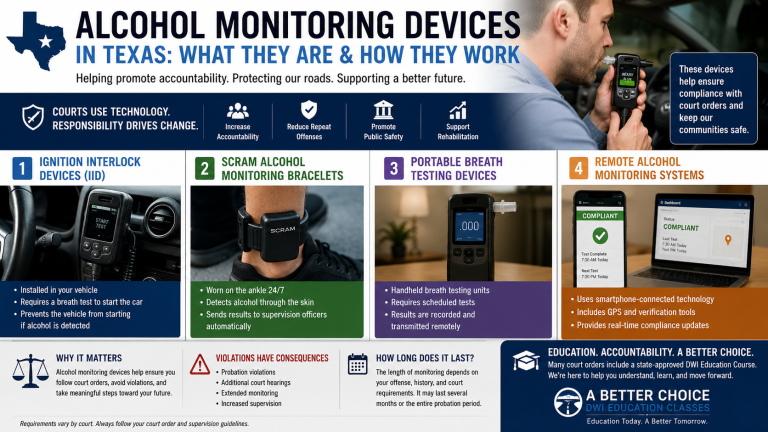
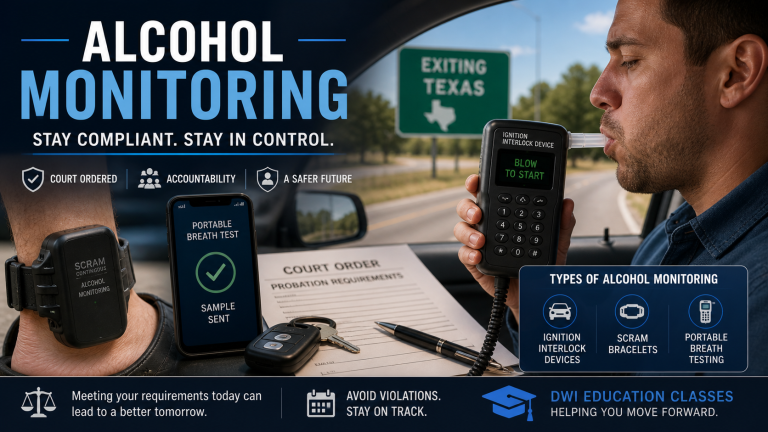
The required test type is usually specified in your court order, probation paperwork, or instructions from your probation officer or attorney. Courts may require urine testing, hair follicle testing, alcohol monitoring, or ignition interlock devices depending on the case. If the order is unclear, it’s important to confirm requirements before testing to avoid delays or rejected results.
What is the difference between hair follicle drug testing and urine drug testing?
Hair follicle drug testing detects drug use over a longer period—typically up to 90 days—while urine drug testing is used to identify recent or ongoing use. Texas courts may use hair testing when a longer history is needed and urine testing for routine probation monitoring or random compliance checks. Both methods are commonly accepted when performed through approved procedures.
Are same-day drug or alcohol test results accepted by Texas courts?
Same-day results are often acceptable, particularly for urine drug testing, as long as the testing process follows court-approved standards and includes proper documentation. Courts and probation departments generally require clear, organized reports rather than delayed or informal results. Always follow the timeline outlined in your court order.
Do official Texas resources replace my court order or probation instructions?
No. Official Texas and federal resources provide general information about court processes, probation, and substance testing, but they do not replace specific court orders or probation conditions. Individuals must always follow the instructions issued by the court, probation officer, or supervising authority for their case.
Get Court-Approved Testing & Monitoring — Done Right
View our alcohol and drug testing services across Texas and get fast, court-ready results you can submit with confidence.