TLDR
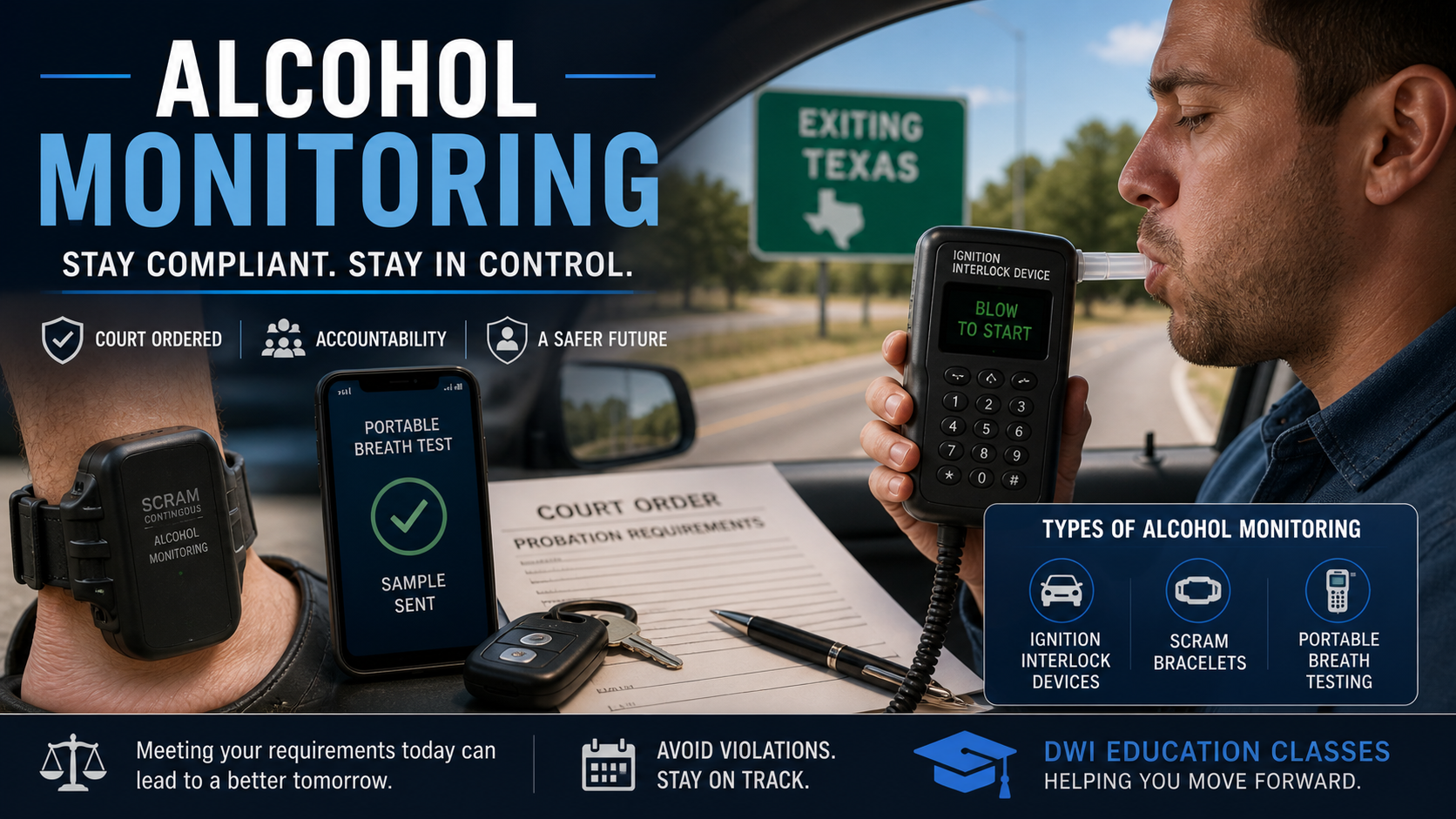
After a DWI in Texas, courts may require alcohol monitoring as part of probation or bond conditions. This can include ignition interlock devices, portable breath testing, or continuous alcohol monitoring systems. These programs are designed to help prevent repeat offenses and ensure compliance with court orders.
What Is Alcohol Monitoring After a DWI in Texas?
After a DWI arrest or conviction in Texas, some drivers are required to participate in alcohol monitoring programs.
These programs are commonly ordered in:
- Repeat DWI cases
- High BAC cases
- Cases involving probation
- Bond release conditions
Whether your case is in Houston, Dallas, Austin, San Antonio, or a smaller Texas county, alcohol monitoring has become increasingly common across the state.
Why Do Texas Courts Use Alcohol Monitoring?
Texas courts use alcohol monitoring to:
- Reduce repeat DWI offenses
- Increase accountability
- Monitor compliance during probation or bond
- Improve public safety
The goal is not only punishment — it’s also prevention and behavioral change.
Types of Alcohol Monitoring in Texas
1. Ignition Interlock Devices (IID)
One of the most common monitoring tools is the:
Ignition Interlock Device
This device is installed in your vehicle and requires a breath sample before the car can start.
If alcohol is detected:
- The vehicle will not start
- Violations may be reported to the court or probation officer
Ignition interlock devices are especially common after:
- A second DWI
- High BAC cases
- Occupational license approvals
2. SCRAM Monitoring
Some courts use:
SCRAM bracelets (Secure Continuous Remote Alcohol Monitoring)
These ankle devices monitor alcohol consumption continuously through the skin.
SCRAM devices are more common in:
- Repeat offenses
- Strict probation cases
- Cases involving multiple violations
3. Portable Breath Testing
Some individuals may be required to:
- Blow into a portable breathalyzer at scheduled times
- Submit test results remotely
This is often used during probation or pretrial supervision.
How Long Does Alcohol Monitoring Last?
The length depends on:
- Your offense level
- Court orders
- Probation conditions
- Prior convictions
Monitoring can last:
- Several months
- The full probation period
- Longer in repeat offense cases
What Happens If You Violate Alcohol Monitoring Rules?
Violations are taken seriously.
Consequences may include:
- Probation violations
- Additional court penalties
- Extended monitoring
- Jail time in severe cases
Even missed tests can sometimes be treated as violations.
How Much Does Alcohol Monitoring Cost?
Most monitoring programs require the participant to pay fees.
Costs may include:
- Installation fees
- Monthly monitoring fees
- Calibration or maintenance charges
The total cost varies depending on the monitoring type and duration.
Why DWI Education Still Matters
Even with alcohol monitoring, Texas courts often still require:
- DWI Education Classes
- DWI Intervention Programs
- Additional counseling or treatment
At A Better Choice, we provide state-approved DWI Education Courses accepted across Texas.
Completing your course on time helps you:
- Stay compliant
- Avoid delays
- Move forward after your case
FAQs
What is alcohol monitoring after a DWI?
It’s a court-ordered system used to monitor alcohol use during probation or bond.
What is an ignition interlock device?
A breath-testing device installed in your vehicle that prevents driving after drinking.
Can alcohol monitoring be required for a first DWI?
Yes, especially in high BAC cases.
Do I still need a DWI class if I have alcohol monitoring?
Yes, courts often require both.
Call to Action
If you’ve been ordered to complete a DWI Education Course in Texas, choosing the right provider matters.
A Better Choice offers state-approved DWI Education Classes accepted by courts and Texas DPS across Houston, Dallas, Austin, San Antonio, and all Texas counties.
Visit https://dwiclassestx.com to enroll today and stay compliant with your requirements.